Where I Begin, Again
In 3A, I wrote to the organizations I work alongside about the systems leaders operate inside. This issue turns toward the leader who feels the weight of this work in your body before you can even name why. It's about what's yours to hold: your boundaries, your dignity, and your agency over your own labor and commitment. I'll share my experience with this, which is still evolving, but I'm not writing only from my story, but what I have witnessed as well..
Across my years in nonprofit work and now in evaluation, I've listened to leaders of color share how tired and overwhelmed they are: by the constraints, the heavy workloads, and the larger, more complex social issues they're trying to address, all while navigating a system that asks them to code-switch, mask, and acquiesce to white norms. I've empathized with the weight of feeling responsible for making change happen, protecting their communities, and convincing their organizations it's worth it. Too often, they're asked to shoulder more than is realistic, and to do it all with a positive attitude and an approachable temperament.
In my own work, I aim to co-design evaluation processes that acknowledge leaders' capacity and the deep contribution they bring through lived experience and nuanced ways of relating to the work. I challenge organizations to build processes that hold, account for, and support those efforts, so that leaders aren't solely asked to advocate for themselves, and so the process offers support and trust in leaders just as much as it measures outcomes. I center anti-racist frameworks to challenge the status quo and widen the invitation for leaders to be themselves, and for that to be seen as a strength. I highlight their voices through feedback loops gathering themes from confidential interviews, and I advocate on their behalf so they don't have to keep repeating themselves.

The Fire and the Wood
I have my own experience with overextending my gift and overestimating what I was responsible for. Thinking about the season change offers some symbolism of what that has felt like for me. As the days get shorter and the air turns cold, we start reaching for warmth. A hearth fire warms a whole house, and it only burns because something is feeding it. In the organizations I worked in, I felt like I was supposed to be that fire: to contribute to change, to give it my all, to be the warmth everyone could lean toward. My gifts were what I fed it with. But any fire that gives that much light also casts a shadow, and that isn't a flaw in the fire. The part I couldn't see was what was feeding it. For years, I was trying to be both the warmth and the wood, and I called it devotion. I don't think I was alone in that. I didn't see the cost until my body told me. So here are my gifts, and the shadow side that came with them.
I am highly sensitive, justice oriented, and community rooted. Those aren't just traits, they're gifts. They're also, if I'm honest, the exact wiring that made me so easy to overextend. My sensitivity meant I felt everything, including what wasn't mine to carry. My justice orientation meant I couldn't look away from what needed fixing. My rootedness in community meant I never wanted to let anyone down. All three, without stewardship, became a map straight into burnout.
If any of that sounds like you, I want to name what I now call the shadow side of these gifts: chronic overextension, where letting your yes be yes and your no be no feels impossible because everyone else's needs feel more urgent than your own. Compassion fatigue, where you carry community pain while underestimating your own grief. Identity erosion, where you start defining yourself by how helpful and useful you are. People-pleasing as survival. Burnout disguised as devotion. And maybe most quietly damaging of all, the guilt of rest, the feeling that setting a boundary or taking space is somehow selfish.
Even if someone had named all of this for me years earlier, I don't think it would have landed the way it does now. Spending so much of your life ignoring your own needs in service of others isn't something you can think your way out of in one sitting. It requires unlearning, not just learning and unlearning is slower, and more uncomfortable, than information ever is. You can hear a truth like this and still spend years walking the long way back to it, because the pattern lives deeper than the knowing.
Cole Arthur Riley writes, “If you aren't in your body, someone else is. The systems of this world have everything to gain from your disembodiment.” I understood that sentence intellectually long before I understood it in my body. Every system I was operating inside of; nonprofit urgency culture, savior narratives, the unspoken expectation that my proximity to pain meant I owed unlimited output, benefited from me staying out of my body. From me not noticing what it was costing me. Knowing that didn't change it. Living differently, slowly, did.
What I'm Learning to Believe
The unlearning didn't happen through willpower. It happened through repetition; coming back to a handful of truths again and again until my body started to trust them as much as my mind did.
I am more than what I do and how I help. My presence alone holds worth. This one took the longest. I had spent so long being valued for my usefulness that “worth without output” felt like a foreign language. I'm still learning to speak it.
I contain multitudes. I can exist and belong in multiple spaces, fully, without apology. I didn't have to choose between being a professional and being a whole person, between being strong and being tender, between showing up for my community and stepping back to protect myself.
My needs are not an inconvenience. This one matters to me in a particular way. My sensitivity and the way my mind and body process the world aren't obstacles to being useful, they're part of what makes me good at this work in the first place. But that only holds if I actually steward them, instead of pushing past them until they force the issue for me.
I want to pause here, though, because I know not everyone reading this will relate to “highly sensitive” as language for themselves. Maybe what pulls you into overextension isn't sensitivity, but a fierce love for your community, or a righteous anger at what's unjust that won't let you look away. The wiring can look different: sensitivity, rage, devotion, loyalty, but the pattern it leads to is often the same: giving until there's nothing left, because the cause felt too important to pace yourself around.
My gifts of sensitivity, justice, and community had to be stewarded, embraced, and accommodated, by me, and by the people and institutions I'm in community with. Whatever your version of these gifts looks like, the same is likely true for you. That word, accommodated, matters. It's not something you can do alone. It requires the people and structures around you to make room too.
Boundaries as Infrastructure
For the most part, I didn't assume other people's boundaries were selfish. When a friend or colleague said no, I generally believed they had a right to that, without much second-guessing. But somehow I never extended myself that same grace. I held myself to a different standard, higher expectations for what I should be available for, what I should be able to carry, what a “good” leader or a “good” community member owed. The boundary wasn't a myth. The myth was that I deserved an exception from the very thing I already believed most people were entitled to.
Unlearning meant letting go of some beliefs I'd absorbed without ever choosing them: that putting others' needs before mine was virtuous by default. That saying no meant I was abandoning someone. That naming my needs made me a burden.
Somatic coaching is part of how I'm unlearning this. Understanding these beliefs was never enough on its own, so I'm learning to meet them in my body, where the pull to overgive actually lives. Sometimes that means pausing to notice where it lands in my body. Other times it means visualizing the release through movement, like dance or stretching. It's slow, and it's helping me hear my limits sooner. I'll share more about that in the next issue.
I want to be real, I still grapple with this, especially in work I deeply care about, and especially with people who look like me or share similar lived experiences as me. There's a particular pull that shows up there: a felt sense of if not me, then who. This isn't something I've perfected. It's something I'm still getting better at discerning; a practice, not a finish line.
What surprised me most, though, is what didn't happen. I used to believe that being boundaried would make me less helpful, that protecting my capacity meant offering less of myself to the people and causes I love. The opposite has been true. I am still deeply caring. I am still helpful. But now I'm also connected to my own wholeness, to my right to rest and to joy — not as things I have to earn after the work is done, but as things I'm entitled to alongside it. That's not a lesser way of showing up for community. It's what allows me to keep showing up at all.
Prentis Hemphill puts it simply: “Boundaries are the distance at which I can love you and me simultaneously.” I think about this alot. A boundary was never about loving people less. It was about making sure there was still a whole person left to do the loving, the same wholeness I always wanted for everyone else.
Self-Care as Regenerative
For a long time, I treated rest as something I had to earn; a reward I could claim only after I'd proven, again, how much I could carry. I don't believe that anymore.
Self-care is responsible stewardship of my gifts, not an indulgence I'm squeezing in around them. Rest is a birthright, not a reward. I don't have to justify it with output first. And maybe most importantly: I cannot sustain community from depletion. An empty version of me was never actually serving anyone, no matter how it looked from the outside.
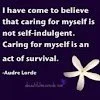
Audre Lorde wrote, in A Burst of Light (1988), “Caring for myself is not self-indulgence, it is self-preservation, and that is an act of political warfare.” She wrote that from inside her own fight with cancer, refusing to let care for her body be mistaken for retreat from her politics. This framing is really important. For those of us doing justice work, rest can start to feel like it's in tension with the fight. It isn't. Depletion was never a requirement of commitment. It was just the thing urgency culture convinced us to mistake for it.
Leaning Into Community as Resource
One of the hardest shifts for me wasn't about rest at all. It was asking for help. I used to believe that needing support meant I'd failed at something I should have been able to handle alone. I'm learning something different: that partnership is a form of load-bearing, not a sign that I couldn't carry my part. That being seen and known, really known, not just known for what I do, actually unlocks capacity I didn't have access to on my own.
After a retreat with other Latina women that felt really safe, Cinthia Manuel, who teaches leaders this very thing and whose voice you’ll hear more of below, told me: “I’m burned out, and it’s okay to accept help, because even though I teach about this, we need to ask for help, we’re not alone.”
I still navigate something like imposter experience sometimes, even while holding real brilliance. Those two things can coexist. Community has been where I've found both anchor and affirmation for that; people who reflect back what's true when my own perception of myself gets distorted by exhaustion or self-doubt. Asking for help, I've learned, is an act of trust, not a confession of inadequacy.
There’s a proverb attributed to African traditions that I return to often: “If you want to go fast, go alone; if you want to go far, go together.” I spent a long time trying to go fast. I'm learning now to go far.
Teaching People How to Honor You
Boundaries tell people what you won't accept. Self-advocacy is the other half; actively teaching people how to work with you, not just where your limits are. For a long time, I defaulted to whatever other people wanted or expected of me, because it felt easier than naming my own way of working. If a meeting time didn't work for my energy, I took it anyway. If a communication style didn't fit how my mind processes things, I adapted myself to it rather than asking for something different. I was so practiced at reading and meeting everyone else's needs that I never built the muscle of naming my own out loud.
What I'm learning now is that advocating for myself isn't an interruption to good leadership, it's part of it. Telling a team I need agendas in advance because that's how I process best. Naming that I need processing time before responding to something high-stakes, instead of performing quick certainty I don't feel. Saying plainly that a certain pace of communication drains me, and asking for a different one. None of this makes me harder to work with. It makes the way we work together actually sustainable, instead of me quietly absorbing friction that was never named.
There's a popular saying that you teach people how to treat you, through what you allow, what you stop, and what you reinforce. I used to hear that as something aimed at other people's bad behavior. I've come to understand it applies just as much to my own good behavior going unnamed. If I never say what I need, I'm teaching people that my needs don't require accommodation. Silence isn't neutral. It's still a lesson, just one I didn't mean to teach.
This matters especially for leaders of color, because so many of us learned early that being easy, being low-maintenance, being whatever the room needed us to be, was the price of being welcomed at all. Advocating for your own capacity and way of being isn't the opposite of being a good leader or a good community member. It's what makes it possible to keep being one, on terms that are actually yours.
Reclaiming Softness
Many of us absorbed an expectation early: that we have to work twice as hard to be seen as half as capable. It comes from institutional racism, and from the lived reality that Black people have often had to do more to get access to the same things. The myth is in how it gets pushed onto individuals, as if personal effort were the answer to systemic inequity, asking us to out-work injustice rather than asking the injustice itself to change. Black folks have done what we could to survive systems that were built unjust from the start.
At this point in my life, I'm exhausted by it. I used to rise to its challenge, and now I see the cost of it, in myself and in the leaders around me. Researchers call this kind of high-effort coping John Henryism, and epidemiologist Sherman James has linked it to wear on Black Americans' bodies over time. For me, working twice as hard demands that I uphold the status quo, and I've decided I'm shifting out of that practice. I don't know many leaders of color who aren't stepping up, over and over, past the point their bodies are asking them to stop. What I rarely see are conversations with leaders about how their overperforming is impacting their rest, their health, their joy. So the offer of softness isn't a nice idea to sit with someday. It's an opportunity to push back on capitalism, which will never ask about your rest, your wellness, or your thriving, only your productivity. Softening is an investment in your wholeness and in the people around you. It's an urgent, welcomed intervention that most of us have never actually been given permission to accept.
Writer and theologian EbonyJanice Moore names something in her book All the Black Girls Are Activists (2023) that reframes this entirely. She asks a question I keep returning to: who would Black women get to be if we didn't have to create from a place of resistance? Her work centers softness, dreaming, ancestral reverence, and radical wholeness as tools of liberation in their own right, not as retreat from the fight, but as part of it.
Her question is asked of Black women, and I keep it that way. I also sit with how it lands for leaders of color more broadly, many of whom have learned to treat struggle as the only legitimate posture: what would it mean for softness, rest, and joy to be treated as valid parts of your leadership, not as breaks from it, and not as something you have to earn the right to ask for?
The cost isn't only to our bodies or our rest. It's the parts of ourselves that exist outside of striving; curiosity, play, tenderness, ease. Moore's invitation is to reclaim wholeness as revolutionary in its own right. Not something we get to once the work is done. Something the work was never supposed to require us to sacrifice in the first place.
Naming the Nonprofit Industrial Complex
The “twice as hard” expectation is about what we've been taught to believe about ourselves and what we owe the world. This is about something more specific: the actual institutional mechanism that can turn that belief into practice. Many of us didn't end up overextended by accident. The systems we work inside of are often designed in ways that quietly depend on our overextension to function.
The activist collective INCITE! Women of Color Against Violence names this directly. In their 2007 collection, The Revolution Will Not Be Funded: Beyond the Non-Profit Industrial Complex, they describe how the nonprofit funding model can co-opt and constrain movements for justice; how organizations, in order to survive on foundation and government funding, often end up shaping their work to satisfy funders rather than the communities they exist to serve. I'd add something to that critique from where I sit: this same system doesn't just shape what work gets funded. It shapes how much is asked of the people doing that work, and how little is offered back in return.
Here's what I mean, plainly: our hearts for community and justice are real. They are not the problem. But that same genuine love can become something organizations lean on instead of building real infrastructure around. When a mission is compelling enough, it becomes easy to justify asking more of the people who believe in it: more hours, more emotional labor, more sacrifice. Because their motivation makes them unlikely to say no. That isn't always intentional exploitation. But intent is different from impact, and the outcome is the same. Love for community, in a system like this, can quietly become leverage.
Naming this isn't a call to stop caring, or to distrust every organization doing this work. It's an invitation to see clearly: your love for your community is not a bottomless resource an organization is entitled to draw from indefinitely, just because the mission is real and the need is real. Both things can be true; the work matters, and you still deserve conditions that don't quietly extract more from your devotion than they were ever willing to give back.
Practices for Dignity and Agency
None of this replaces the organizational change I wrote about in 3A. These are ways to keep your dignity and agency over your labor while that change catches up.
1. Make clear asks, and be transparent in your check-ins. Not every supervisor will ask what you need, and some will. If yours doesn't, managing up is a tool you can reach for. It means telling your supervisor what you need to do the work well: your capacity, your priorities, and where you need support or a decision. It isn't complaining or going around anyone. It's giving them what they need to support you, like “I can take this on if that comes off my plate.”
2. Check in with yourself each quarter. Look at your capacity, your growth, your challenges, and your goals. Name what needs to pivot and what you need to ask for next quarter, then bring those asks forward instead of carrying them alone.
3. Get clear on the accommodations and conditions you need. Notice what helps you do your best work and where you hit friction. Naming it, even just to yourself at first, is how you start designing conditions that fit you. This matters especially for those of us diagnosed late, or never. CDC data show more than half of U.S. adults with ADHD were diagnosed in adulthood, and in a 2025 study of 900 adults in one clinical program, women were diagnosed about five years later than men even though symptoms started at similar ages. For Black girls, KFF Health News reports, symptoms are often mistaken for laziness or defiance, so ADHD often goes undiagnosed. My own exploration of my neurodivergence has helped me name what I need. Please note: not everyone reading this is neurodivergent, and you don't have to be to benefit from knowing the conditions where you thrive. Naming what you need isn't asking for a favor. It's information your organization needs to design work that can hold you.
4. Practice rest and joy on purpose. Choose self-care and community-care practices that restore you, and treat them as part of the work, not a reward for finishing it. The Audre Lorde Project's wellness planning template can help: name a moment you're heading into, map your needs across heart, body, mind, and community, and decide who can support you.
5. Build your support system and find your voice. Surround yourself with people who reflect back what's true and who you can be raw with. Practice saying what you need out loud, because your voice gets stronger with use.
A Practitioner's View: Practical Wisdom for the Journey
FEATURED VOICE — CINTHIA MANUEL, MBA
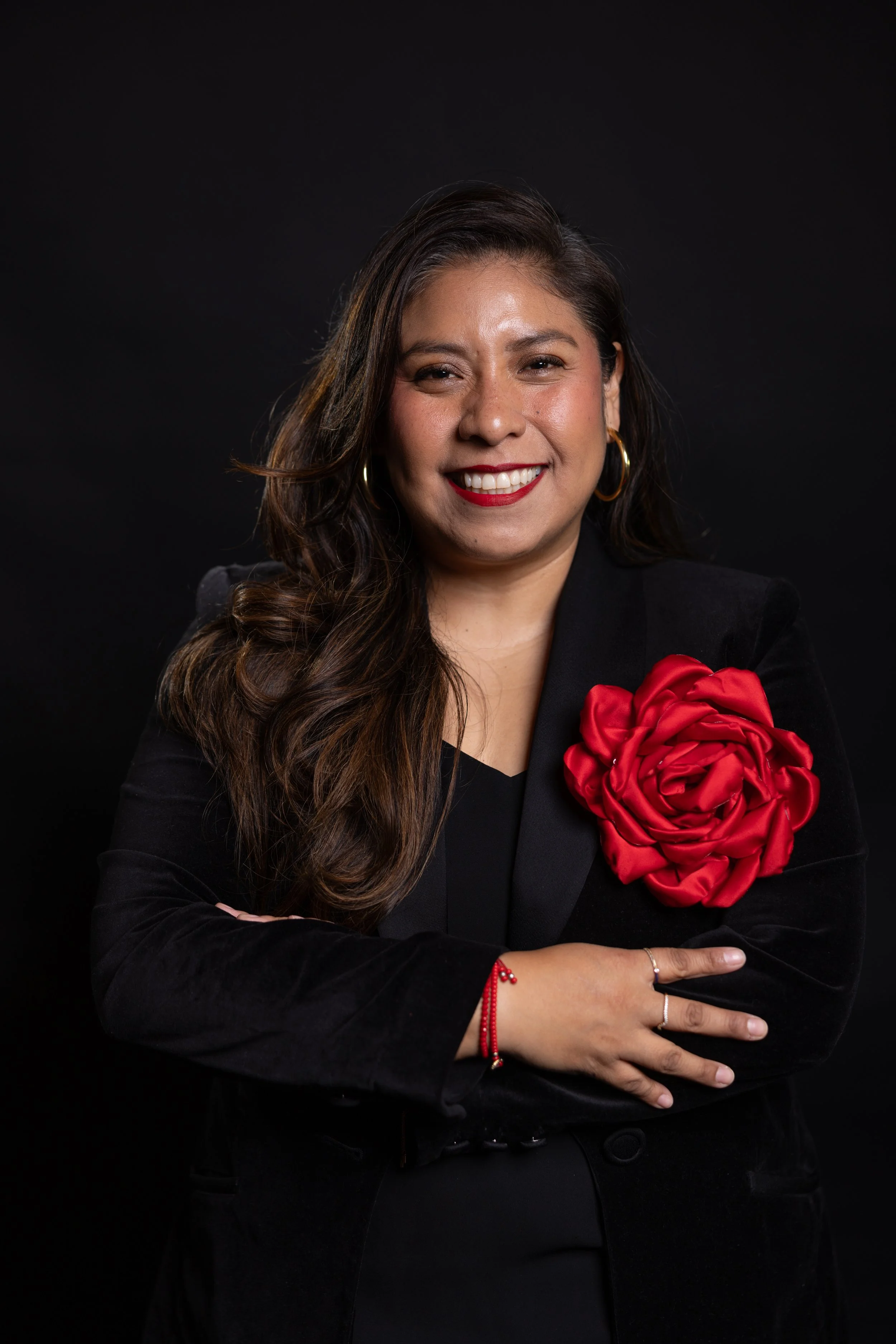
I want you to hear from someone who is actively doing what this piece asks of leaders: building a sustainable practice while still caring deeply. Cinthia Manuel, CEO of Autentica Consulting, co-leads the Constructing Autenticidad BIPOC Leadership Program, built for BIPOC leaders in mid-level roles with real decision-making and culture-shaping influence. She has spent years developing leaders, including me, when she was my Director and I was her Assistant Director at Emerging Leaders. What she modeled then, and still models now, is that authenticity and genuine relationship don't have to be sacrificed for effectiveness. A few pieces of what she shared:
Listen to the full conversation with Cinthia: https://youtu.be/MFLrf6aO4RM
On her own burnout
“I had to really expose a lot of my trauma, and I had to expose a lot of my own personal examples and experiences... I would be crying in between trainings, and I couldn't understand why, until... I got so good at numbing myself and my emotions. And I was still showing up... And so my body, I felt like it was just really tired. I would literally have body aches... I put myself on the back burner... I literally stayed there for many years, thinking that's the right thing to do. Like, I don't matter as much, my community, my family matter first.”
On what she's still learning
“I build network with intention. But I think when I was doing that, it was the intention of how can the community that I'm building support my community? And it was never an intention of, oh, how are they going to support me and show up for me?... Now I'm reworking that, creating a smaller circle where I can actually be raw... and trusting that they're gonna catch me. And I feel like that... I don't know how not to be the problem solver, the go-getter... My friends feel like they put a mirror, and then they're like, Cinthia, you need to love yourself, self-care, and we're here for you. And I was like, nope, nope, I got this... We had a retreat with Latina women, and we were just open, and for whatever reason, that space felt really safe. Wow, you are right, I'm burned out, and it's okay to accept help, because even though I teach about this, we need to ask for help, we're not alone... And for some reason, I thought, I don't want to bother anybody to show up for me.”
On what she's seeing in the leaders she develops
“When I got to work with Black, Brown, and Indigenous folks, I really started seeing this whole self-doubt. That was coming from them, and also not realizing the power and privilege that they carry themselves... The program is not really around, oh, we're gonna teach a bunch of frameworks, and we're gonna teach you how to become a better leader, because that is not it. They are leaders already... I said we're all born diamonds. But the systems in which we are exposed to are kind of throwing a little dirt here, a little dirt there, and then it builds up to the point where we're like, I no longer shine. And it's because I'm doing something wrong. And that is not true... it's because the systems are preventing us from showing who we truly are... I'm putting a mirror for you to see how incredible you already are... At least 50% of our participants had either gotten promoted and got a different job, have more intentionality in what they want to do, they're showing up better, they have more confidence.”
On leading with authenticity
“My grandpa lost his hearing at a young age... and my maternal grandma also didn't know how to read and write. And yet, all of them coming together allowed my sister and I to just be children... When I came to the United States, I think that's when I realized, wow, I had to dim my light, per se, because I'm being told to assimilate. My accent was probably... the one thing that I... that I hated the most. And... people made fun of me... My grandpa and grandma navigated Mexico City so beautifully... back then, it was, like, 15 million people in Mexico City, living. And they navigated that... And they didn't have to change who they were... I never saw my grandpa, my grandma, as less than. Actually, I respected them so much... Realizing that I was worth more than I was told... I need to show up how I'm feeling, how I am... to honor the beauty of the life that I saw my grandparents live, to honor the sacrifices that my parents went through.”
Wisdom for a leader running on empty
“It's okay to feel that way. Every emotion is valid... How do you want me to show up for you? And even if you don't know what that looks like right now, the second you tell me, here's how I want you to show up, I will be there, because I'm making that commitment... They're these beautiful individuals that carry so much wisdom, so much love, so much care... It's a reminder that they're not alone... Asking for help, yeah, it's hard, 100%. But if we wouldn't ask for help, how then are we expected to show up at 100% for the people that we say we're doing the work for and that we care about? So, we're doing ourselves a service to fill our tank to the full line. So then we can show up better.”
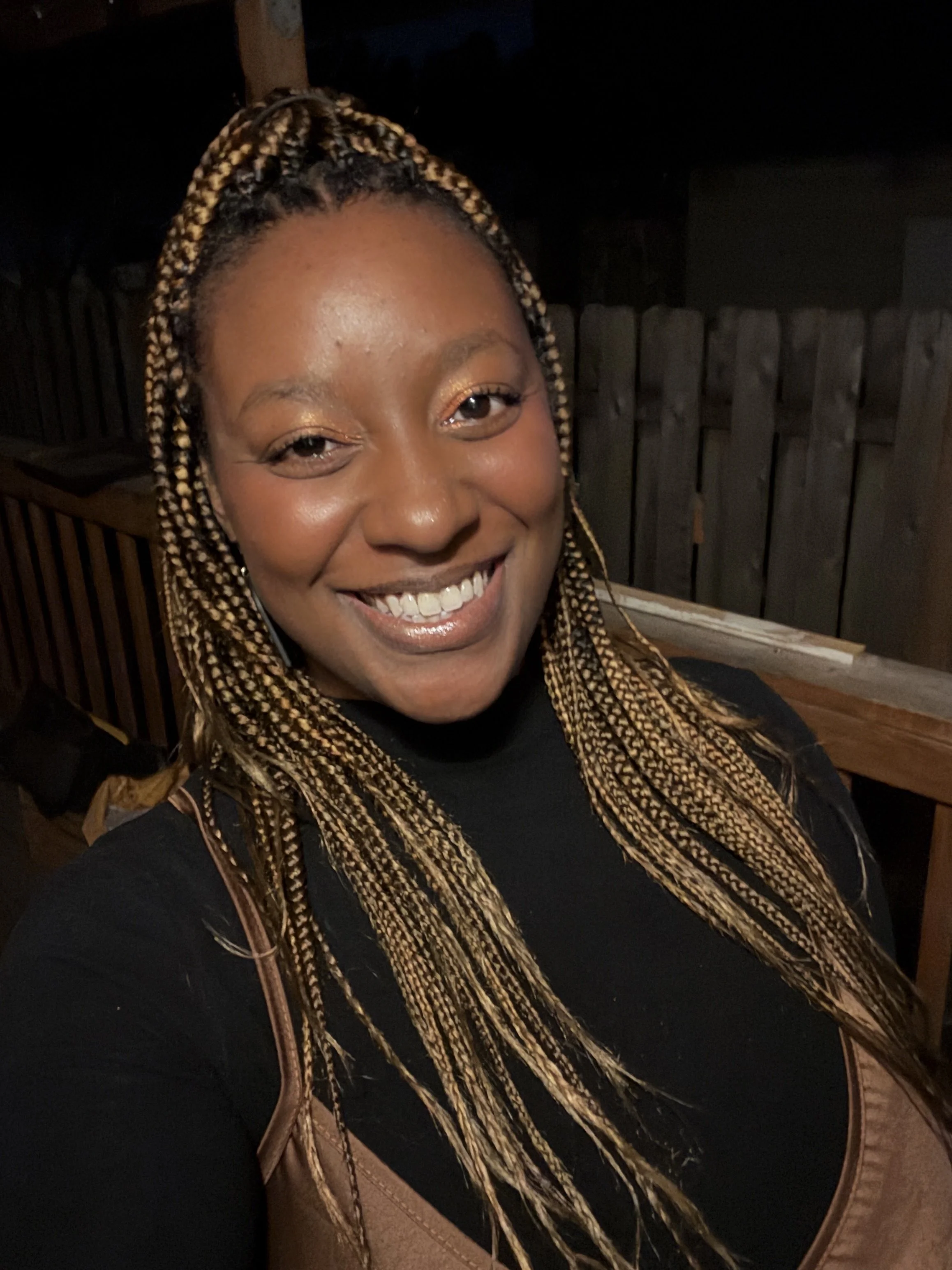
Grounded in Passion, Still Learning to Rest
I have no problem admitting that I am still learning. This isn't a story with a resolved ending, where I found rest and boundaries and now live in some permanent state of wholeness. It's an ongoing practice, one I return to daily, some days better than others.
Becoming a consultant has been part of that practice. It created space I didn't have inside organizations, and it pushed me to define my boundaries and say out loud how I want to be engaged in the work: what I can hold and what I need. That has made me a better steward of my gifts. It has also helped me identify and name my shadow side and my limits instead of pretending I don't have them. Those limits aren't a flaw in my commitment. They're what keep it going. What was never fair was the expectation that passion should cost you your body, your relationships, and your right to rest and joy.
Below are affirmations I often say to myself. I'd love to share them with you, so you can adapt them for yourself:
• Your passion for justice and for community is not the problem. It never was.
• You are allowed to be justice-oriented and well.
• You are allowed to care deeply and still say no.
• You contain multitudes.
• You are more than what you do and how you help.
• Your presence alone holds worth.
• You can rest because it's your birthright, not because you've earned it.
Affirmations become a practice when you act on them. So I encourage you to advocate for yourself, teach people how to honor you and reclaim your softness in a world that puts profit over people. Leaders of color deserve every bit of the wholeness we so often give to everyone but ourselves, including the same grace we’d give any leader who told us they were tired.
As the days get shorter, may you be warmed by the fire you've been feeding, and not only be the one who keeps it going.
Reflection Questions
1. Where in your body do you notice the pull to say yes to an ask, a deadline, or another responsibility before you've checked in with yourself? What would it take to pause long enough to hear what your body is asking for?
2. What are you quietly absorbing right now that no one has named? Who could you tell what you need, before you're running on empty?
3. If this isn't your experience, but someone on your team may be living it, how would you know? What signs might you notice, and what could you put in place, like clear priorities, realistic timelines, or regular check-ins, so no one has to overextend to be seen as committed?
In the next issue, I turn toward the body. Because once we can name the pull to overgive, we still need ways to listen to what our bodies are telling us about capacity, and organizations need to build around it. Somatic practitioner Sarah Rimmel joins me to explore capacity as a starting place, not a limitation.
With gratitude and so much care,
Amani